
artigo ·Fundamentals
So, what is greenwashing? How does it relate to the circular economy?
Taís Pasquotto Andreoli, of Unifesp, traces the origin of greenwashing, shows how it erodes trust in the circular economy and how measuring circular practices helps fight it.
Taís Pasquotto Andreoli, Unifesp· · 3 min de leitura
By Taís Pasquotto Andreoli*
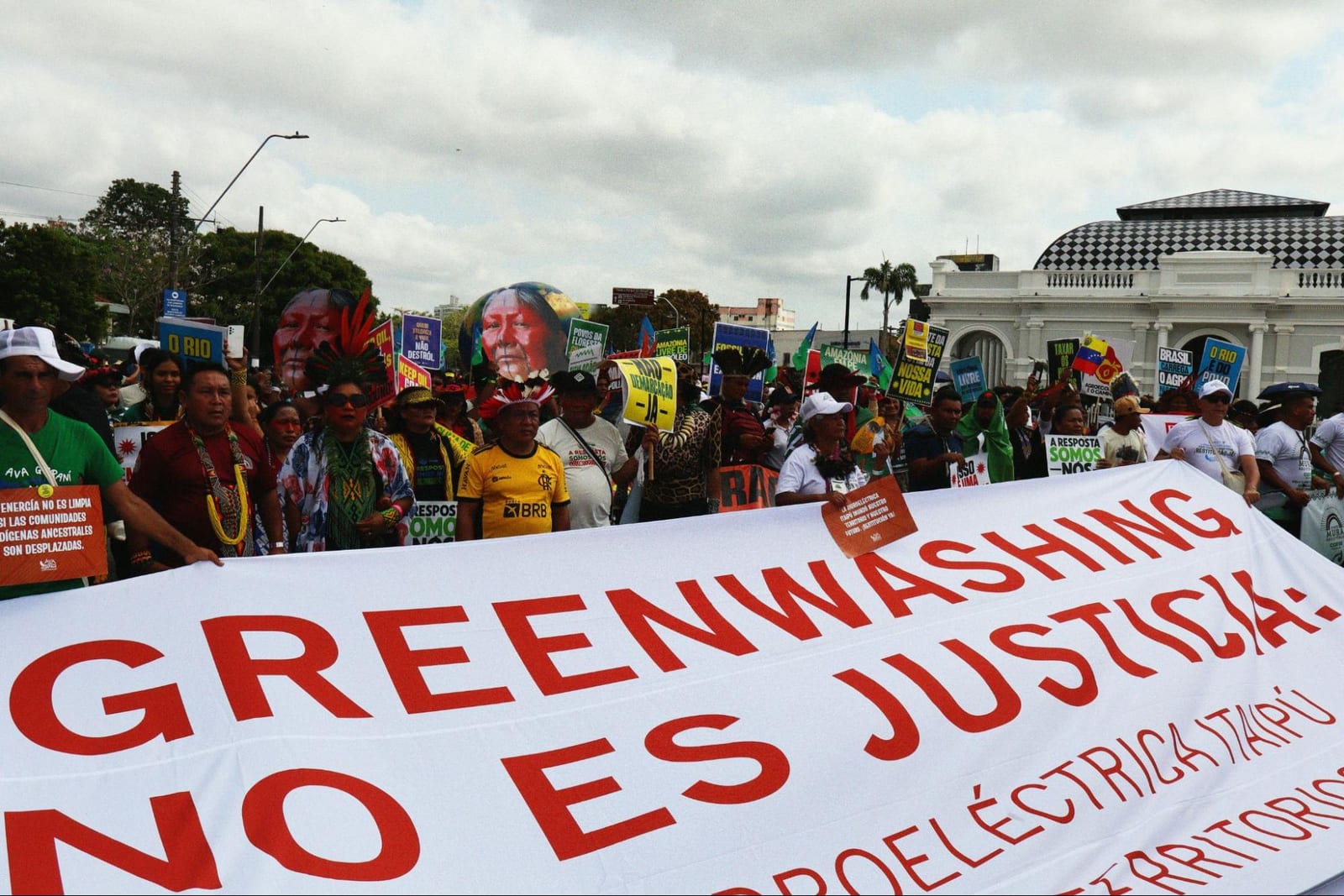
The origin of greenwashing is attributed to Jay Westerveld, an environmental activist who, in 1986, denounced the hotel practice of promoting towel reuse as an environmental preservation measure. It is worth reflecting that this practice continues to this day, and hotels rarely disclose both benefits to consumers: by reducing the need to wash towels, there is indeed environmental preservation, but it is tied to an economic interest (lower costs).
Thus, since its origin, greenwashing has reflected an organizational intention to promote a selective discourse on environmental issues, whether by exaggerating positive contributions and/or by hiding or minimizing negative impacts.
When environmental discourse does not match practice
For this reason, greenwashing is defined as misleading marketing communication, characterized by the incongruence between what the organization promotes (the talk) and what it actually practices (the walk). From the very makeup of the word, we can understand greenwashing as a process of green washing applied to products, brands and/or organizations so that they appear environmentally responsible or even sustainable, without necessarily being so.
Although it emerged in the 1980s, academic interest only intensified from 2020 onwards, with a sharp growth in scientific output on greenwashing. This can be explained by the recurrence of cases reported in the media, which made the practice more visible in the organizational sphere and more debated in society.
The proliferation of greenwashing (alongside other derived washing practices) ended up drawing attention and calling for academic research that could contribute to a better understanding of this dynamic. As a result, we now have a considerable body of studies on greenwashing in general, as well as work heading in different directions: on the one hand, seeking broader understandings, turning to CSR-washing (in reference to Corporate Social and Environmental Responsibility) or ESG-washing (Environmental, Social and Governance); on the other, delving into specific contexts, such as the circular economy.
In this sense, some authors even advocate adopting a specific term, circular washing, in a move similar to what happened with other offshoots, such as vegan washing. Considering the current state of the art in this line of research, we can highlight two main approaches.
When greenwashing undermines sustainability
The first, quite critical, focuses the discussion on the negative impacts of greenwashing on the circular economy, which revolve around the trivialization of sustainable value, both in terms of loss of competitive advantage in the market and in terms of consumers' lack of trust. This means that greenwashing has created a scenario in which it is intentionally difficult to identify genuine sustainable practices and to distinguish them from misleading promotion, which makes assertive, consistent responses unfeasible.
If the market in general (consumers, suppliers, investors, among other stakeholders) cannot make this distinction, it also cannot reward correct conduct or punish misleading conduct. As a result, we tend toward trivialization, with the loss of sustainable value. The harmfulness of this effect can reach consumer behavior itself: by generalizing the lack of sustainability in the organizational sphere, consumers also take it on themselves.
Ultimately, the impact would be an increase in consumer resistance, reducing or even undermining possible shifts toward more responsible purchasing and consumption behaviors. Given this alarming picture, greenwashing is argued to be a significant obstacle to the circular economy.
Circular economy to fight greenwashing
But, to counter this pessimistic scenario, there is the second approach, which positions the circular economy as a promising path for mitigating greenwashing. In this sense, the circular economy provides a set of sustainability-related practices, with a structure that enables not only their operationalization (planning and organization) but, above all, their monitoring and evaluation (measurement).
As a consequence, supported by strategic management, circular economy practices can be integrated into ESG conduct, especially in terms of governance, providing a more transparent, authentic and verifiable approach to organizational sustainability.
This publication is part of the partnership between Circular Movement and the Universidade Federal de São Paulo (Unifesp) for the production and dissemination of knowledge on the Circular Economy. The opinions expressed are the author's responsibility and do not necessarily reflect the institutional position of Circular Movement.
* Taís Pasquotto Andreoli - Professor and Researcher at the Academic Department of Business Administration of the Universidade Federal de São Paulo (Unifesp) and at the Programa de Pós-graduação em Administração (PPGA): Transformação Digital e Sustentabilidade nas Organizações e Sociedade (Graduate Program in Business Administration: Digital Transformation and Sustainability in Organizations and Society). Deputy Head of the Academic Department of Business Administration. Instagram
*This text was automatically translated with the help of artificial intelligence and reviewed. Still, there may be slight differences compared to the original version in Portuguese.
This content stays open because many people support it.
The Círculo do Movimento brings together those who give every month, from R$ 17.
Cancel whenever you want, in one click.
citar este artigo
TAÍS PASQUOTTO ANDREOLI, UNIFESP. So, what is greenwashing? How does it relate to the circular economy?. Movimento Circular, November 27, 2026. Available at: https://movimentocircular.io/en/blog/what-is-greenwashing-and-how-does-it-relate-to-the-circular-economy.
Your organization already has a circular agenda. What is its next step?
See how to take part