
artigo ·Fundamentals
2nd Circular Economy Forum expands South American collaboration on the road to COP31
The partnership with the Zero Waste Foundation strengthens the international connection announced during the event in São Paulo and expands dialogue on the issue.
· 6 min de leitura
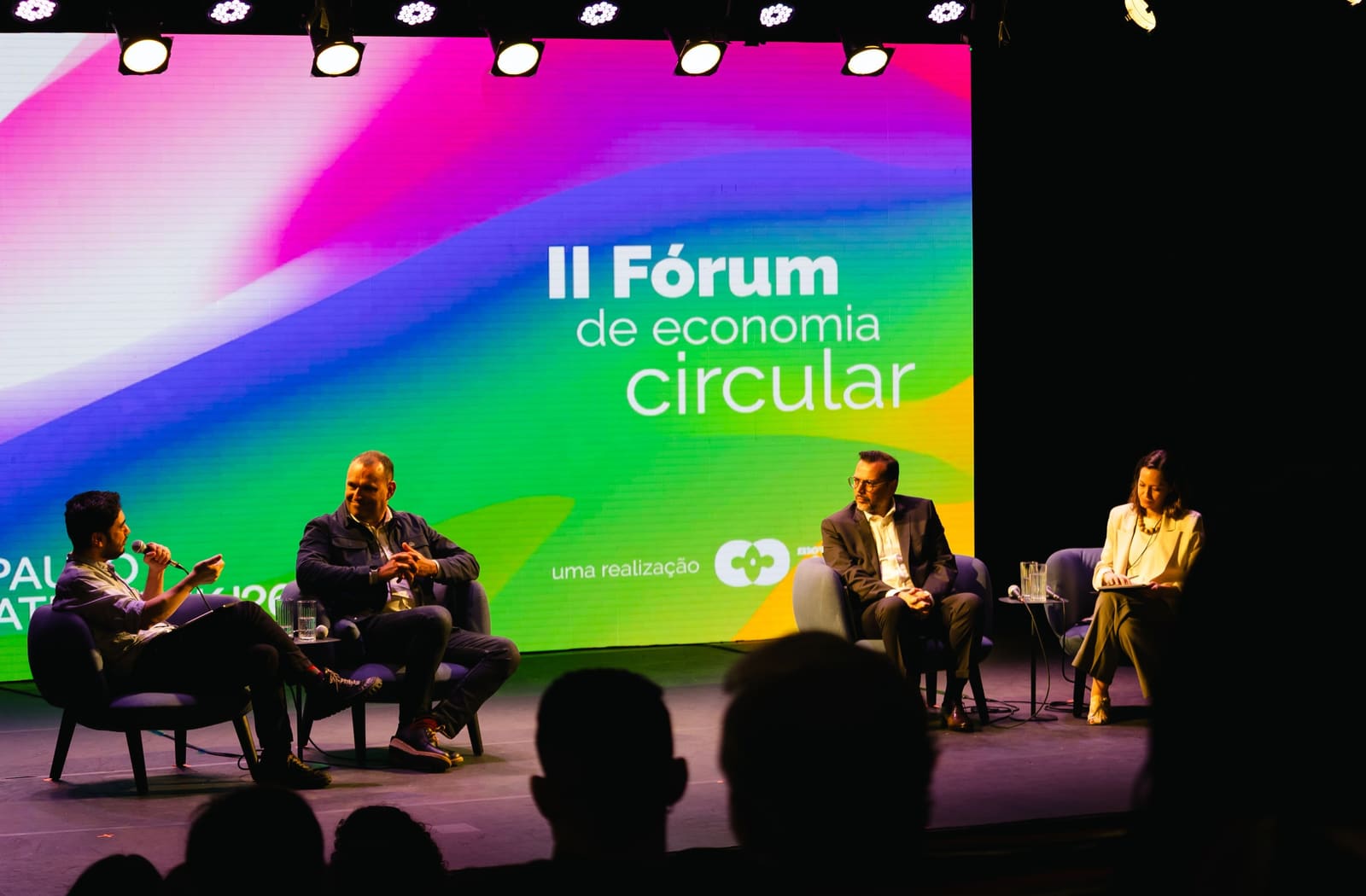
The 2nd Circular Economy Forum concluded its second edition in São Paulo, strengthening collaboration among experts, companies, governments, and international organizations from across South America around the zero waste and circular economy agendas. At a time when only 6.8% of materials used worldwide return to the production cycle and Brazil’s recycling rate stands at around 1.5%, one of the key outcomes of the event was the formalization of a partnership between Movimento Circular and the Zero Waste Foundation, a Turkish organization that leads the zero waste agenda globally and creates a bridge to discussions ahead of COP31.
For the first time, the zero waste agenda will be part of the core discussions at COP31, which will take place from November 9 to 20 in Antalya, Türkiye. The partnership will strengthen connections between representatives from Brazil and South America and the international circular economy agenda, contributing to the development of proposals and discussions that will continue over the coming months in the lead-up to the conference.
During the 2nd Circular Economy Forum, targets jointly defined by COP31 and the UN Secretary-General’s Advisory Board of Eminent Personalities on Zero Waste were presented for the first time. These targets are expected to guide international discussions on the circular economy through 2035. They include increasing the share of electricity as a clean energy source from approximately 20% to 35%; cutting the growth of global waste generation in half; and increasing the share of circular materials used in the economy to at least 15%.
“The partnership with the Zero Waste Foundation creates a bridge between the good practices being developed in South America and the development of proposals that could be presented at COP31. According to official data, 45% of the climate challenge is tied to the circular economy, while the remaining 55% depends on the energy transition,” says Vinicius Saraceni, executive director of Movimento Circular.
For Carlos Silva Filho, the only Brazilian member of the UN Secretary-General’s Advisory Board of Eminent Personalities on Zero Waste, the inclusion of the issue in the core climate agenda represents a historic shift in international climate discussions.
“For the first time, we will have a climate conference addressing this issue as part of its main agenda. Studies already demonstrate clearly that zero waste and circular economy actions can prevent and mitigate greenhouse gas emissions, directly contributing to the goal of keeping global warming below 1.5 degrees Celsius.”
The second edition of the Circular Economy Forum brought together more than 1,000 leaders and decision-makers throughout its programming, including representatives from government, business, academia, and multilateral organizations, with approximately 50 speakers taking the stage during the two days of panels. Organized by Movimento Circular, the event established the issue as one of the key pillars of São Paulo Climate Week and expanded dialogue and collaboration among different sectors around discussions leading up to COP31.
“The circular economy discussion has moved beyond diagnosis and firmly into the implementation agenda. The Forum helped consolidate proposals, share experiences, and strengthen an international collaboration that will continue through COP31,” says Saraceni.
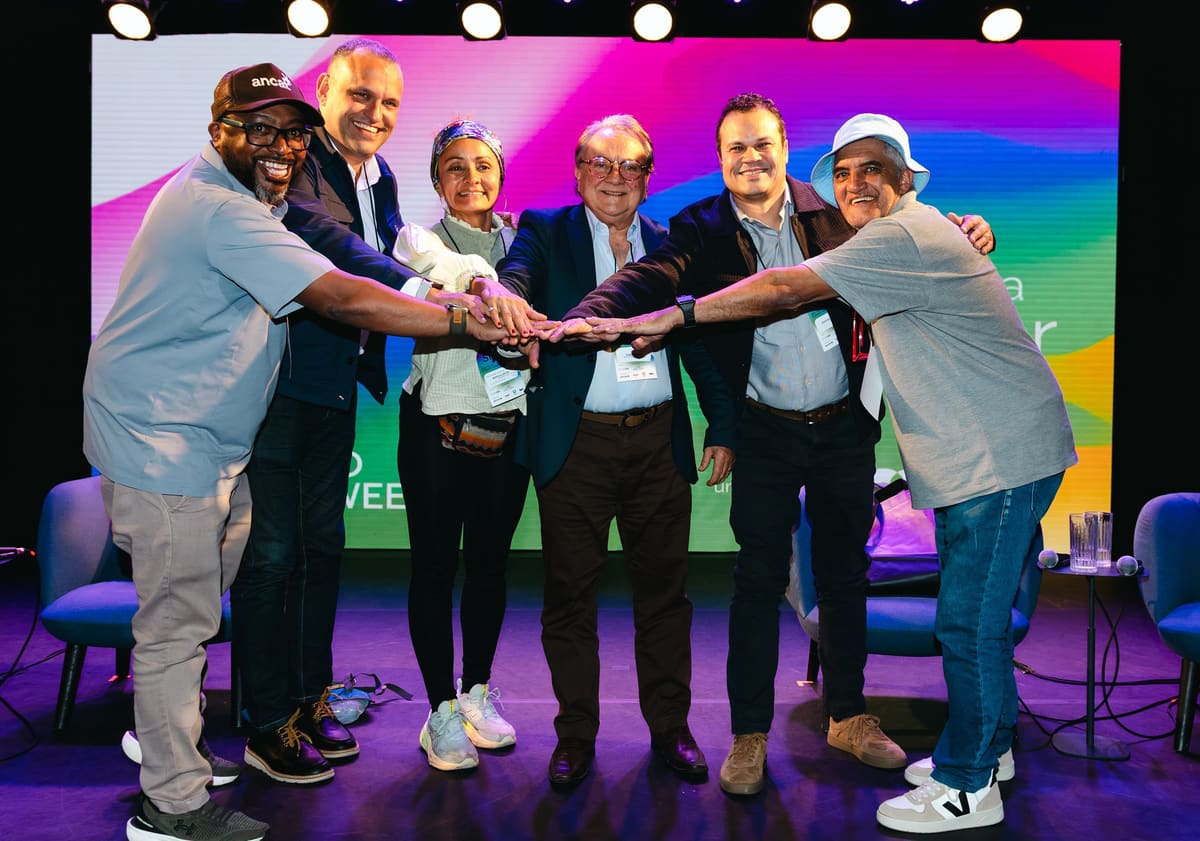
Photo: Júlia Ferraz / Special for Movimento Circular
The circular economy gains international momentum
The importance of this agenda is underscored by data on material and waste recovery in Brazil and around the world. Globally, only 6.8% of all materials used by industry return to the production cycle, representing an estimated economic loss of €25.4 trillion (approximately R$148 trillion), or roughly one-third of global GDP. In Brazil, the situation is even more challenging, with the recycling rate at around 1.5%.
Material recovery is directly connected to addressing climate change. According to internationally recognized studies, approximately 45% of the effort needed to reduce global greenhouse gas emissions depends on the adoption of circular economy practices.
“Either the world replaces the linear economy, based on waste and the continuous extraction of natural resources, with a circular and regenerative economy, or we will continue to face increasingly frequent extreme weather events,” says Saraceni.
Why the circular economy must be at the center of the climate agenda
The transition to clean energy sources accounts for approximately 55% of the reduction needed in global greenhouse gas emissions. The remaining 45% depends on how the world produces, consumes, and disposes of products and food. This is demonstrated by the Completing the Picture study by the Ellen MacArthur Foundation.
The latest data reinforces the urgency. According to the Global Resources Outlook 2024, published by the United Nations Environment Programme (UNEP) and the International Resource Panel, the extraction and processing of materials already account for more than 55% of global emissions.
“The energy transition addresses a little more than half of the problem. The other half lies in how we produce, use, and dispose of materials. That is exactly where the circular economy comes in, and why it must definitively occupy a central place in the climate agenda,” says Saraceni.
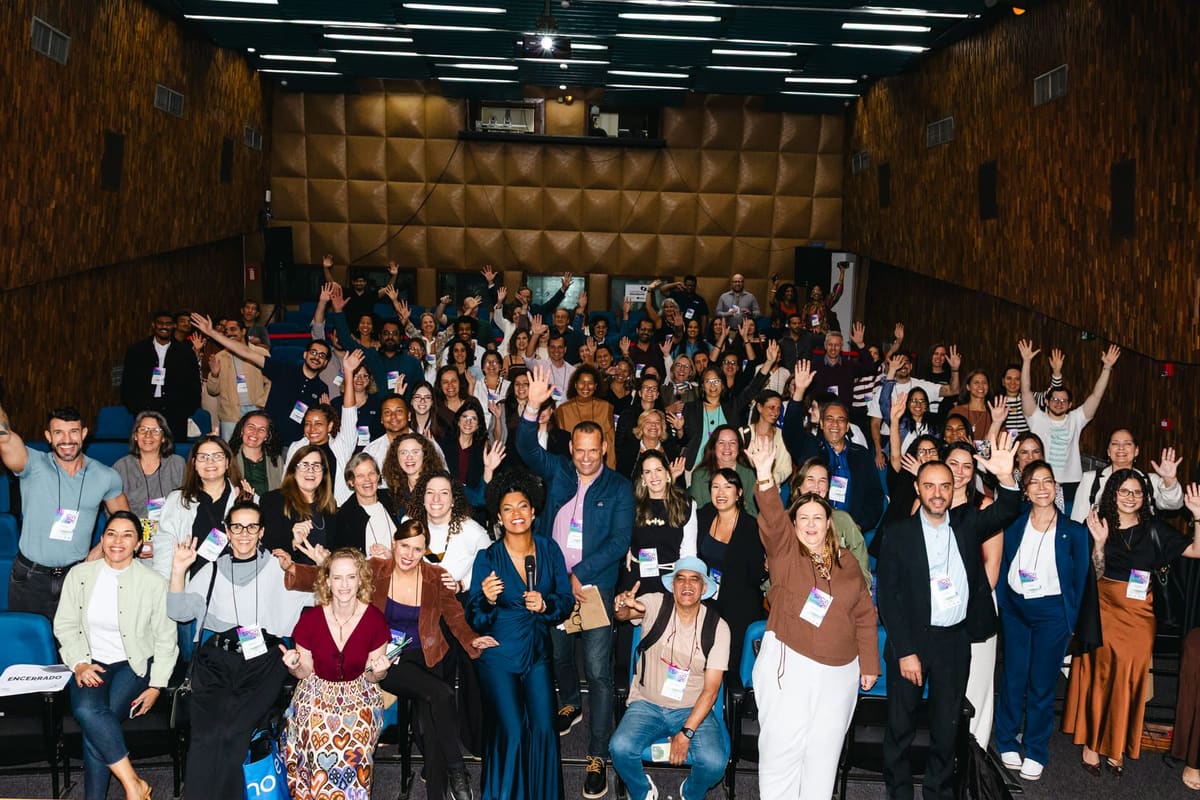
Photo: Júlia Ferraz / Special for Movimento Circular
Forum strengthens collaboration on the road to COP31
The second edition of the Circular Economy Forum brought together more than 1,000 leaders and decision-makers throughout its programming, with approximately 50 speakers taking part in the two days of panels. In total, the event delivered more than 30 hours of content, experiences, and connections.
Organized by Movimento Circular, the Forum was an official side event of the World Circular Economy Forum (WCEF), the leading international reference for the circular economy, and was part of the São Paulo Climate Week program, consolidating its position as the leading meeting point for the circular economy during the climate week.
Over three days of programming, representatives from government, business, universities, international organizations, and civil society discussed public policy, reverse logistics, circular mobility, innovation, climate finance, circular consumption, and new business models. The event also featured technical visits, practical case presentations, and exchanges on initiatives capable of increasing material recovery, reducing emissions, and strengthening the transition to a low-carbon economy.
The collaboration built during the Forum will continue in the coming months, expanding dialogue among different sectors across South America and strengthening their connection with the international zero waste agenda in the lead-up to COP31.
Event achieved carbon neutrality
As a Carbon Neutral event, the 2nd Circular Economy Forum also neutralized the carbon emissions generated during its activities through a partnership between Movimento Circular and Solví, one of Latin America’s leading environmental solutions companies and a global pioneer in generating carbon credits from landfill gas.
During the event, participants were able to calculate and offset emissions associated with their travel through certified carbon credits, supporting projects focused on biodiversity conservation, income generation, professional training, and community development in vulnerable areas.
“It would not make sense to bring hundreds of people together to discuss sustainability without putting these principles into practice. We want to show that the circular economy stops being just a concept when it begins to guide concrete decisions,” says Saraceni.
About Movimento Circular
Movimento Circular is a Brazilian think tank and Latin America’s largest open initiative focused on circular economy education. It brings together more than 90 organizations - including companies, universities, civil society organizations, experts, and partner institutions - with the goal of accelerating the transition to a regenerative, low-carbon economy based on the efficient use of natural resources.
Through education programs, knowledge production, institutional engagement, and national and international events, Movimento Circular has reached approximately 7 million people, promoting best practices and developing projects aimed at increasing material recovery, reducing greenhouse gas emissions, and advancing new models of sustainable development.
* Originally published on the Mundo do Plástico website - August 7, 2026
This content stays open because many people support it.
The Círculo do Movimento brings together those who give every month, from R$ 17.
Cancel whenever you want, in one click.
citar este artigo
MOVIMENTO CIRCULAR. 2nd Circular Economy Forum expands South American collaboration on the road to COP31. Movimento Circular, August 7, 2026. Available at: https://movimentocircular.io/en/blog/2nd-circular-economy-forum-expands-south-american-collaboration-on-the-road-to-cop-31.
Your organization already has a circular agenda. What is its next step?
See how to take part