
artigo ·Fundamentals
When the climate changes, tourism must change too
Tourism, climate, and circularity are increasingly connected in building resilient and future-ready destinations.
· 5 min de leitura
By Isabela Bonatto
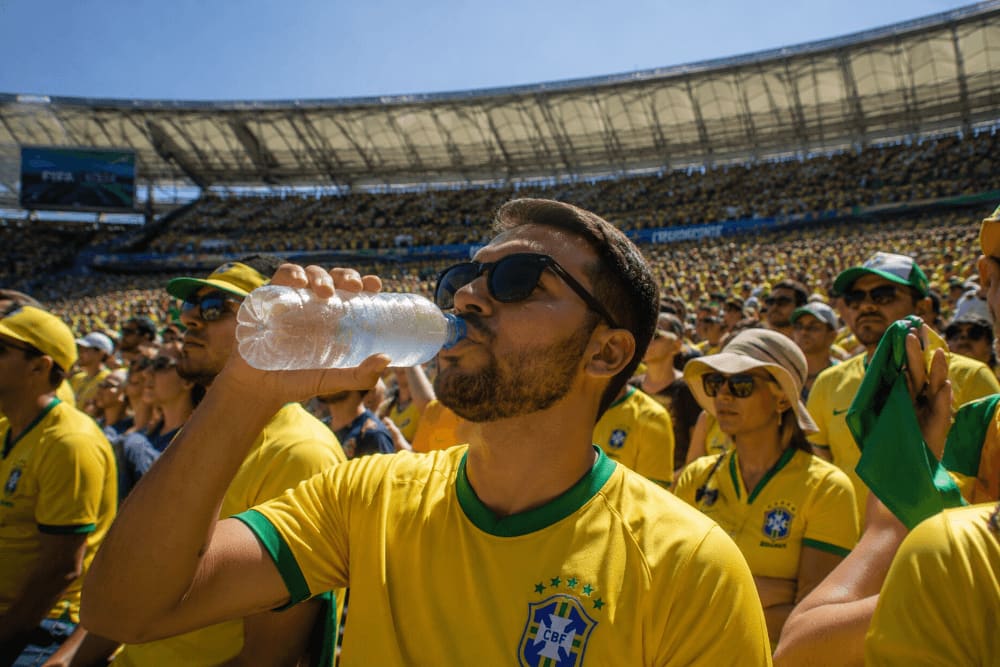
The next World Cup has not even begun, yet one of its biggest opponents is already on the field: extreme heat. With matches scheduled during the Northern Hemisphere summer in cities across the United States, Mexico, and Canada, concerns are growing about high temperatures and their impacts on athletes, fans, workers, transportation systems, and public health. This discussion is not merely about sports; it is also about climate, cities, public health, and economics. And perhaps that is precisely why the World Cup serves as a starting point for a broader reflection: if even one of the largest events on the planet must adapt to an increasingly extreme climate, what does that mean for tourist destinations that depend directly on preserved landscapes, thermal comfort, water availability, and functioning infrastructure?
For a long time, tourism was associated with favorable weather, beautiful beaches, natural landscapes, cultural heritage, and, more recently, “Instagram-worthy” destinations. But on a hotter and more unstable planet, the travel experience increasingly depends on a destination’s ability to withstand extreme events. Heat waves, water scarcity, wildfires, flooding, coastal erosion, and infrastructure overload are already affecting destinations around the world. In some regions, the challenge comes from excessive visitor numbers placing pressure on local services. In others, it stems from environmental vulnerability in the face of increasingly intense events. In many places, it is both at the same time.
Venice, for example, is not facing challenges simply because tourists exist. The issue lies in the combination of tourism pressure, urban vulnerability, sea-level rise, extreme weather events, and limitations in local infrastructure. Islands in the Caribbean and the Pacific are not concerned because storms have always existed, but because their impacts are changing in scale, frequency, and intensity. Beach destinations are dealing with coastal erosion, poorly managed waste, and growing pressure on water resources. Mountain regions are already experiencing changes in snowfall patterns, affecting traditional tourism activities.
Tourism may be one of the sectors that most clearly reveals the connections between climate, the environment, sanitation, and public health. When water becomes scarce, tourism feels the impact. When waste accumulates, tourism feels the impact. When beaches become unsafe for swimming, tourism feels the impact. When extreme heat compromises comfort and safety, tourism feels the impact. When infrastructure fails, both residents and visitors are affected.
For this reason, treating tourism, sanitation, health, and the environment as separate issues is a mistake. Climate change is demonstrating exactly the opposite: when one of these systems collapses, all the others are affected as well.
This is where the Circular Economy can—and must—enter the conversation. The Circular Economy should not be understood merely as recycling or waste management. In an era of climate change, it becomes an essential strategy for strengthening the resilience, competitiveness, and future viability of tourist destinations.
In tourism, this means rethinking how resources are used, wasted, and reintegrated into productive cycles. It means reducing food waste in hotels, restaurants, and events. It means valuing organic waste through composting and other local solutions. It means expanding water reuse, improving waste management, encouraging local purchasing, reducing single-use products, strengthening local supply chains, and regenerating the ecosystems that sustain tourism itself.
It also means planning more effectively. Climate adaptation is not simply about building barriers, installing air conditioning, or reacting after an emergency occurs. It is about redesigning systems so they become less vulnerable, less wasteful, and better prepared to handle environmental, social, and economic pressures.

The World Cup may become a powerful example of this new reality. Planning matches with extreme heat in mind is not alarmism—it is responsibility. Likewise, preparing tourist destinations to cope with water scarcity, flooding, urban heat islands, or pressure on public services is not an exaggeration. It is risk management.
Interestingly, in our personal lives, we understand this logic very well. Before traveling, we check the weather forecast, make reservations, verify our documents, purchase insurance, pack medications, and think about what could go wrong in order to avoid inconvenience. As our grandparents used to say, “prevention is better than cure.” The question is: why do we readily apply this logic to a weekend trip, yet still resist incorporating it into climate, urban, tourism, and environmental planning?
Climate change is transforming the way we live, travel, and occupy territories. Tourism is simply one of the most visible indicators of this transformation. We can continue treating every heat wave, flood, or waste crisis as an isolated event. Or we can use the signals already available to plan more effectively. On a changing planet, the Circular Economy is no longer just an environmental proposal—it is becoming part of the adaptation strategy for territories. After all, if we can plan a trip to avoid unexpected problems, perhaps it is time to plan tourism for a climate that has already changed.

Dr. Isabela da Cruz Bonatto is an ambassador for the Circular Movement and holds both a Ph.D. and a Master’s degree in Environmental Engineering from the Federal University of Santa Catarina (UFSC). She works as a socio-environmental consultant, focusing on sustainability, circular economy, waste management, international cooperation, and socio-environmental impact.
After living in Kenya and working across African countries for five years, she is currently based in Bangladesh. She serves as a Recycling Specialist for the United Nations Environment Programme (UNEP) and as a consultant for B Corp Certification. She also collaborates with civil society organizations and initiatives focused on socio-environmental impact and sustainable development.
*This text was automatically translated with the help of artificial intelligence and reviewed. Still, there may be slight differences compared to the original version in Portuguese.
This content stays open because many people support it.
The Círculo do Movimento brings together those who give every month, from R$ 17.
Cancel whenever you want, in one click.
citar este artigo
MOVIMENTO CIRCULAR. When the climate changes, tourism must change too. Movimento Circular, June 10, 2026. Available at: https://movimentocircular.io/en/blog/when-the-climate-changes-tourism-must-change-too.
Your organization already has a circular agenda. What is its next step?
See how to take part