
artigo ·Fundamentals
“This Has Always Happened”: The Risk of Ignoring New Climate and Scientific Patterns
Recognizing climate patterns—not isolated events—is essential for prevention and informed decision-making.
· 4 min de leitura
By Isabela Bonatto
Whenever I come across news about heat waves, El Niño, floods, wildfires, or other extreme weather events, I have a curious habit: I read the comments people leave on social media. I like observing the reactions of those who do not work directly with climate, sustainability, sanitation, or risk management when experts, researchers, or environmental professionals share their perspectives. And one sentence appears again and again:
“This has always happened.”
When the topic is extreme heat, someone recalls how hot it was in the 1980s or 1990s. When flooding is discussed, someone points out that the city has always flooded. When droughts, wildfires, or severe storms are mentioned, the response often follows the same pattern: “This isn't new.” “It's always been this way.” “Stop the climate alarmism.”
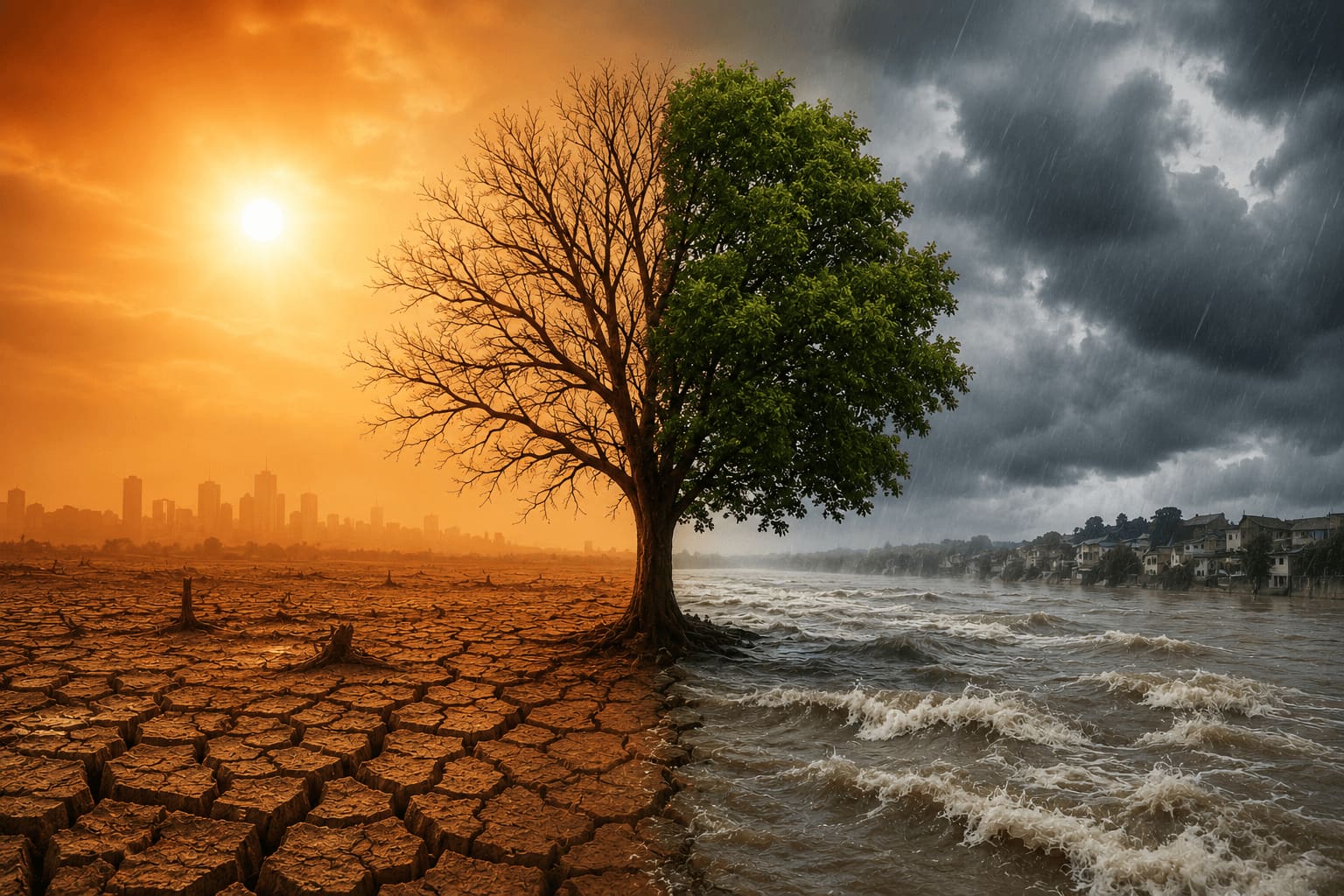
To some extent, these people are not entirely wrong. There has always been heat. There has always been heavy rain. There have always been droughts, storms, floods, and natural climate variability. The problem is that, although this statement is true, it is often used to avoid a much more important question: are these events occurring with the same frequency, intensity, and duration as they did before? That is where the conversation changes.
The scientific discussion around climate change is based on historical records, long-term trends, measurements, models, and observed patterns. The issue is not an isolated event, but a shift in the pattern itself. Perhaps this is one of the greatest challenges in climate communication: explaining that what matters is not an individual's memory of the past, but the collective interpretation of data collected over time.
That is why the phrase “this has always happened” can be dangerous. It may sound like a defense against exaggeration, but it can end up becoming a barrier to prevention. When adaptation measures are discussed, part of society interprets them as unnecessary costs, exaggeration, or climate alarmism. Yet waiting until a problem occurs before reacting is usually far more expensive—in lives, financial losses, human suffering, and reconstruction efforts.
The state of Rio Grande do Sul offered us a painful example. Signs of vulnerability, planning failures, occupation of high-risk areas, infrastructure limitations, and the growing intensity of extreme weather events had been discussed for many years. Even so, the disaster was often treated as though it had come as a surprise.
This reveals a troubling aspect of how we deal with risk: we tend to fully believe in it only after it has become a crisis. Before that, warnings seem exaggerated. Prevention appears to be an unnecessary expense. Planning feels like bureaucracy. Science sounds pessimistic. After tragedy strikes, everything suddenly seems obvious.
This mindset extends far beyond the climate debate. We have seen it with pandemics, water shortages, public health crises, wildfires, landslides, and many other emergencies. While risk remains in the realm of prediction, many people prefer to wait. Once it becomes reality, we ask why nothing was done beforehand.
The data were available. The warnings existed. Reports had already been published. Risk maps had already been drawn. The problem is that prevention rarely has the same emotional impact as an emergency.
This is the paradox of prevention: when it works, it appears as though nothing happened. Perhaps that is why it is so difficult to defend politically, financially, and socially. Prevention requires trusting data before disaster strikes. It requires acting before public outrage emerges. It requires making decisions while there is still time—not only after we are already counting our losses.
This leads to an important reflection: planning is not alarmism. Designing cities to withstand floods does not mean wishing for floods. Preparing healthcare systems for heat waves does not mean hoping for extreme temperatures. Building infrastructure capable of withstanding more intense climate events does not mean believing that every rainfall will become a disaster.
It means recognizing that reliable information already exists and using it to reduce risks. Science asks us to broaden our perspective beyond individual experience and pay attention to long-term patterns. Repeating that “this has always happened” may temporarily provide a sense of normalcy. But normalizing warning signs does not reduce risks—it simply delays our response.
And on a planet undergoing rapid transformation, delaying our response can come at an enormous cost.

Dr. Isabela da Cruz Bonatto is an ambassador for the Circular Movement and holds both a Ph.D. and a Master’s degree in Environmental Engineering from the Federal University of Santa Catarina (UFSC). She works as a socio-environmental consultant, focusing on sustainability, circular economy, waste management, international cooperation, and socio-environmental impact.
After living in Kenya and working across African countries for five years, she is currently based in Bangladesh. She serves as a Recycling Specialist for the United Nations Environment Programme (UNEP) and as a consultant for B Corp Certification. She also collaborates with civil society organizations and initiatives focused on socio-environmental impact and sustainable development.
*This text was automatically translated with the help of artificial intelligence and reviewed. Still, there may be slight differences compared to the original version in Portuguese.
This content stays open because many people support it.
The Círculo do Movimento brings together those who give every month, from R$ 17.
Cancel whenever you want, in one click.
citar este artigo
MOVIMENTO CIRCULAR. “This Has Always Happened”: The Risk of Ignoring New Climate and Scientific Patterns. Movimento Circular, June 30, 2026. Available at: https://movimentocircular.io/en/blog/this-has-always-happened-the-risk-of-ignoring-new-climate-and-scientific-patterns.
Your organization already has a circular agenda. What is its next step?
See how to take part