
artigo ·Fundamentals
The role of universities in the transition to a circular economy
Universities are essential to advancing the Circular Economy by connecting research, education and public engagement with real-world solutions.
· 6 min de leitura
By Flávio de Miranda Ribeiro
The Circular Economy is not merely a new sustainability trend, but a profound shift in values and practices — one that requires systemic transformations in how we produce, consume, and dispose of materials. For this transition to be consistent, long-lasting, and technically grounded, universities must be at the center of the process.
It is no coincidence that Brazil’s 1988 Federal Constitution established the inseparability of teaching, research, and extension activities as a fundamental principle of university action (Article 207). These three pillars, recognized by Brazil’s Ministry of Education and CAPES as structural foundations of academic life, offer a precise roadmap for understanding how higher education institutions can contribute concretely and distinctively to the circular transition in Brazil.
Extension: universities as partners in transformation
A survey conducted by the Brazilian National Confederation of Industry (CNI, 2025) with 253 industries revealed that six out of ten Brazilian companies are already familiar with the concept of Circular Economy. This is a significant step forward, but awareness alone is far from guaranteeing circular practices. Most projects are still concentrated on recycling, as shown by analyses of FINEP projects between 2017 and 2021. There remains enormous room to advance in other dimensions of circularity, such as product design, material management, and business models.
This is precisely where universities and Science and Technology Institutes (ICTs) can make a real difference: by applying scientific methods to support business decisions and public policies.
In the private sector, universities can offer organizational diagnostics, pilot projects, feasibility studies, targets and indicator proposals, research partnerships, and technology development initiatives. All these fronts gain greater depth when grounded in scientific evidence rather than merely good intentions.
Examples from my own experience include the handbook on Circular Economy ISO standards developed for CNI/FIRJAN/FIESP and the Circular Economy Guide created for the ACV Network.
In the public sector, the role is equally strategic. Brazil is currently experiencing an intense period of regulatory development regarding Circular Economy. Following the launch of the National Circular Economy Strategy (ENEC) in 2024, new bills proposing a National Circular Economy Policy are advancing, reverse logistics regulations are evolving, the National Climate Change Plan now incorporates circular principles, and initiatives such as Pronarep and the Green Seal Brazil Program indicate a government agenda increasingly committed to transition.
In this context, examples in which I had the opportunity to collaborate include the “Waste and Circular Economy” chapter in the Brazilian G20 Presidency Technical Paper, as well as the National Circular Economy Plan developed by MDIC/MMA, which is expected to guide public initiatives across several ministries in the coming years.
In this scenario, the scientific and independent perspective provided by universities is irreplaceable. Regulatory impact assessments, program evaluations, policy proposals, and implementation criteria all require methodological rigor that only academia can provide independently.
Teaching: preparing people for a world still being built
The transition to a Circular Economy requires not only new technical knowledge, but also a new worldview. A “circular mindset” involves abilities such as systems thinking, the capacity to envision solutions beyond linearity, understanding product life cycles and value chains, and mastering ecodesign principles and low-carbon or bio-based materials.
But the demands go beyond technical competencies. Communication, collaboration, and leadership skills in complex contexts — the so-called “soft skills” often neglected in traditional curricula — are equally essential. New learning models are also needed: prototyping laboratories, collaborative projects, problem-based learning, and transformative educational strategies that position students as active participants in the process.
Demand for this knowledge already exists and continues to grow. Supply, however, remains limited. In this regard, it is worth highlighting the contribution of Movimento Circular through the Circular Academy, an open and free training platform, as well as high-quality educational materials available to teachers at multiple educational levels. Personally, I had the privilege of developing a series of five free online Circular Economy courses through SENAI-SP, in addition to publishing, also through SENAI-SP, Latin America’s first Circular Economy textbook.
Research: the science Brazil needs to produce
Circular Economy as a research field arrived relatively late in Brazil. The first academic studies using this terminology date back to 2014, with significant expansion between 2019 and 2022. There is still vast territory to explore — and Brazil possesses unique assets to become a global leader in this area.
The country holds one of the world’s richest biodiversities, with enormous potential for bioeconomy applications ranging from fuels to materials and renewable biological inputs. Brazil also has a rich repertoire of social solutions developed to address scarcity challenges. In addition, the knowledge and cultural practices of traditional communities are increasingly recognized as valuable assets for circular innovation.
This evolution is essential because Brazil still faces deep social inequalities, low educational levels in some regions, infrastructure deficits in sanitation, and a growing culture of consumption associated with social mobility — dynamics that make the circular transition more complex and demand solutions adapted to the Brazilian context.
In this field, my professional experience reflects the gradual appropriation of this knowledge. Back in 2014, I had the opportunity to contribute to discussions about how Circular Economy was transforming waste policy in Europe. Over time, we increasingly brought this discussion into our own territory, such as in a book chapter published in 2024 alongside one of Movimento Circular’s partners, dedicated to discussing the role of reverse logistics as a Circular Economy instrument in Brazil.
It is not enough to import models. We need research that speaks the language of Brazil and the Global South — research capable of considering our cultural, social, and regulatory context to develop business models that are viable and transformative here.
A particularly eloquent example strongly supported by Movimento Circular is Brazil’s model for including waste pickers in reverse logistics systems. This model is unique worldwide and has inspired other countries, yet it still has much room for development — which requires high-quality research grounded in solid scientific foundations.
If universities do not lead, who will?
The Circular Economy presents itself as a pathway out of humanity’s current sustainability crisis — but this path requires cooperation, openness, and institutional maturity. In my view, it is time to “bring science into the room.”
No one can achieve this alone. Initiatives such as Movimento Circular are fundamental for connecting actors and building bridges between sectors and forms of knowledge. However, ensuring continuity and strengthening these initiatives is essential.
A fair and inclusive transition toward a Circular Economy necessarily passes through classrooms, laboratories, and partnerships focused on public benefit — the very contributions that only academia can build. Universities must assume, responsibly and with commitment, the role that history and the Constitution have reserved for them: not as supporting actors, but as protagonists.
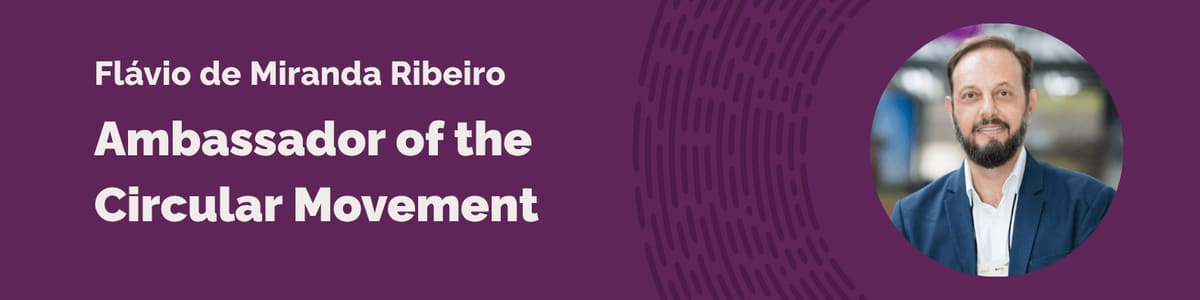
Professor, researcher, and consultant in Circular Economy, Reverse Logistics, and Environmental Regulation. Ambassador of Movimento Circular and Circular Economy Advisor to the United Nations Global Compact in Brazil.
This content stays open because many people support it.
The Círculo do Movimento brings together those who give every month, from R$ 17.
Cancel whenever you want, in one click.
citar este artigo
MOVIMENTO CIRCULAR. The role of universities in the transition to a circular economy. Movimento Circular, May 25, 2026. Available at: https://movimentocircular.io/en/blog/the-role-of-universities-in-the-transition-to-a-circular-economy.
Your organization already has a circular agenda. What is its next step?
See how to take part