
artigo ·Fundamentals
The first apple: food waste and climate change
Food waste is a major climate issue. Simple daily actions help reduce impact and make better use of resources across the food system.
· 4 min de leitura
By Marisol del Toro
A serious question for you: how much longer do you think food production on planet Earth will be enough to sustain us? That was the question that crossed my mind as I took a bite of an apple and thought about everything that had to happen for me, a simple human being, to taste that sweet and ripe fruit.
For an apple to end up on our table, many things must have happened: the collection of the seed, planting, irrigation, fertilization, growth, the survival of both the tree and the fruit through various natural phenomena — and climate change —, harvesting, transportation, commercial transactions, manual handling at its destination, and finally its arrival at the market so that someone — well, not just anyone, but someone with the financial means — can buy it and bring it home to their family.
When described this way, it becomes clear that enjoying an apple, or any other food, is not something simple. It requires multiple resources and the work of many people to make it possible. So every time that food ends up in the trash — whether because it ripened too quickly or was not consumed in time — all that human and natural effort that was already invested is wasted.
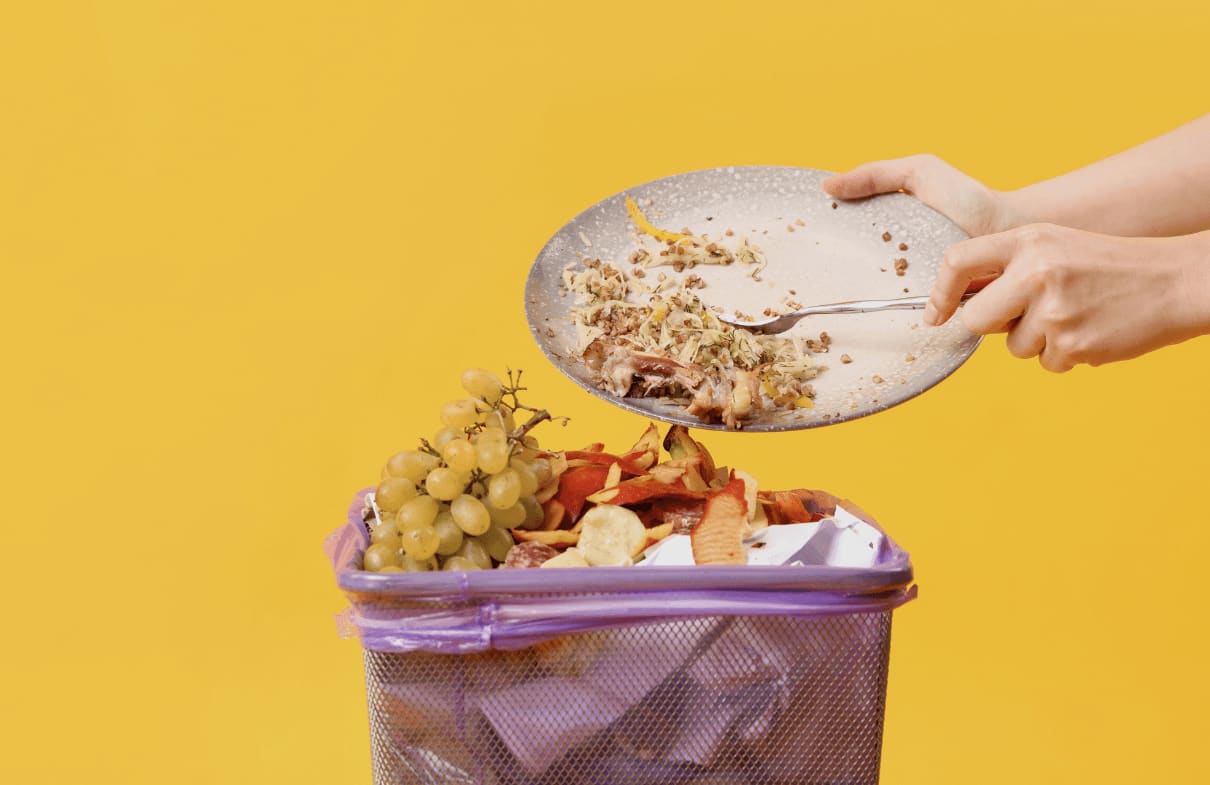
Among the factors contributing to the climate crisis we are experiencing, food waste ranks third. According to the United Nations, nearly 1 billion tons of food (about 17% of all food available to consumers worldwide) are thrown away each year. The production, transportation, and disposal of this food account for more than 8% of global greenhouse gas emissions. If food waste were a country, it would be the third-largest emitter in the world.
According to studies by the World Wide Fund for Nature (WWF), a large portion of biodiversity loss on the planet is related to the way we produce our food. The impact of food systems on nature includes uneaten food, unsustainable agricultural practices, expansion into wild areas and the resulting deforestation, as well as unsustainable fishing and aquaculture.
While it is true that this issue is not entirely linear and requires the involvement and commitment of various political and social actors, it is also true that it has never been more urgent to rethink our habits around food purchasing and waste. For this reason, from Movimento Circular, we propose three simple actions to help mitigate this situation at home:
- Plan and organize: Create a list of meals and ingredients you intend to prepare and consume during the week and stick to it. This way, you will only buy what is necessary and avoid waste.
- Cook and eat at home: Consume what you prepare before considering buying food elsewhere. This is the best way to ensure that everything in your refrigerator is used, and it will likely benefit your budget as well.
- Check what you already have: Review the amount of food in your home and pantry. Check expiration dates, share what you know you will not consume in time, and most importantly, be aware that when you buy something, you are responsible for its use. It is up to you to ensure it is used properly.
If we begin with these small actions, we can create habits that will generate results in our daily lives (and in the not-so-distant future). Most importantly, we will consciously choose not to waste anything that comes into our hands.
It is worth reflecting that, in the realm of imagination, if Eve — that famous Eve — had wasted the first apple before taking a bite, humanity would never have existed.
*Prof. Marisol Del Toro - Ambassador of the Circular Movement in Mexico. She holds a Bachelor's degree in Communication Sciences from Vasco de Quiroga University, a Master's degree in Human Development from La Salle University Morelia, and is currently a doctoral candidate in Education at the University of the Americas, with ongoing research. She was a teacher in secondary and higher education for 17 years and is an examiner for the International Baccalaureate Organization, whose educational program is taught in over five thousand schools worldwide.
*This text was automatically translated with the help of artificial intelligence and reviewed. Still, there may be slight differences compared to the original version in Spanish.
This content stays open because many people support it.
The Círculo do Movimento brings together those who give every month, from R$ 17.
Cancel whenever you want, in one click.
citar este artigo
MOVIMENTO CIRCULAR. The first apple: food waste and climate change. Movimento Circular, May 6, 2026. Available at: https://movimentocircular.io/en/blog/the-first-apple-food-waste-and-climate-change.
Your organization already has a circular agenda. What is its next step?
See how to take part