
artigo ·Fundamentals
The Earth is circular
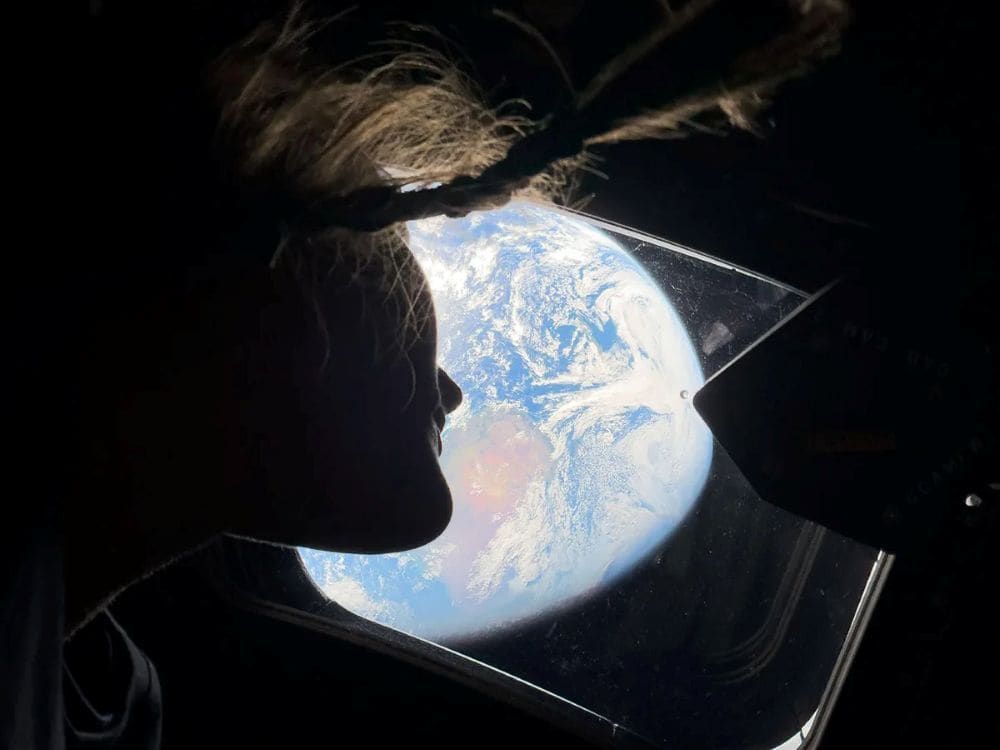
Seeing Earth from space reinforces circularity as a path to rethink systems, align with nature, and strengthen the cycles that sustain life on our planet.
· 3 min de leitura
By Edson Grandisoli
What a beautiful moment to be alive.
The Artemis II mission gives us back the possibility of revisiting one of the most transformative perspectives ever experienced by human beings: observing Earth from deep space. Since the days of the Apollo program missions, images of our planet suspended in the void have profoundly changed how we see the world and helped inspire a generation of environmentalists. Seeing Earth as a small blue dot, without visible borders and surrounded by a thin layer of atmosphere, makes clear just how beautiful—and incredibly fragile—our planet is.
This new opportunity to look at our home from space aligns with Earth Day, one of the most important dates in the global environmental calendar. In 2026, the theme is “Our Power, Our Planet,” an invitation to reflect on humanity’s collective role in protecting ecosystems, people, and all forms of life that share this planet with us.
The theme emphasizes that addressing socio-environmental challenges—especially climate change, biodiversity loss, and pollution—depends on the choices we make every day. At the same time, it reminds us that not everyone has the same conditions or opportunities to choose. It calls for expanding our perspective beyond ourselves, recognizing that our power lies not only in technologies that take us to the Moon or allow us to observe Earth from afar, but also in our ability to reorganize our activities to respect planetary boundaries.
In the same spirit, viewing Earth from space reveals another profound connection: circularity.
Designing human systems inspired by natural processes is at the core of the circular economy. Unlike the linear model based on extract, produce, consume, and discard, circular economy proposes a system inspired by Earth’s natural cycles.
Leaves fall, decompose, nourish microorganisms, and support new plant life. Water evaporates, forms clouds, precipitates, and returns to rivers and oceans. In nature, almost nothing is wasted. Matter circulates continuously in interconnected systems, maintaining the balance essential for life. In this perspective—where technical and biological cycles coexist—circularity embraces regeneration, a key principle of truly circular economies.
Observing Earth from space also reminds us that all these cycles occur within a finite and interconnected system. There is no “away” to send waste, nor infinite resources to extract. This realization invites us to rethink development models and align them with the balance and renewal found in nature.
More than a technical shift, this is a cultural transformation. It requires rethinking values, consumption patterns, and how we organize society. In this context, education for circularity plays a central role.
When integrated across curricula, it helps people understand these cycles and recognize themselves as part of them. It is not just about learning about the environment, but learning with and from it—developing responsibility, empathy, and systems thinking.
Circularity, therefore, is not only an economic or environmental concept, but a lens to understand the world. A lens that reveals connections, interdependencies, and consequences. It helps us see that every action contributes to strengthening—or weakening—the systems that sustain life.
Perhaps, as we once again see Earth from space, we can renew the sense of awe inspired by Apollo images—and deepen our understanding of our responsibility to care for the cycles that make life possible.
*Profº Drº Edson Grandisoli
Ambassador of the Circular Movement, he holds a Master’s degree in Ecology, a PhD in Education and Sustainability from the University of São Paulo (USP), and a postdoctoral fellowship through the Global Cities Program (IEA-USP). He is also a specialist in Circular Economy through the UN’s UNSCC. He is also a co-founder of the Schools for Climate Movement, a researcher in the field of Education, and associate editor of the journal Ambiente & Sociedade.
**This text was automatically translated with the help of artificial intelligence and reviewed. Still, there may be slight differences compared to the original version in Portuguese.
This content stays open because many people support it.
The Círculo do Movimento brings together those who give every month, from R$ 17.
Cancel whenever you want, in one click.
citar este artigo
MOVIMENTO CIRCULAR. The Earth is circular. Movimento Circular, April 22, 2026. Available at: https://movimentocircular.io/en/blog/the-earth-is-circular.
Your organization already has a circular agenda. What is its next step?
See how to take part