
artigo ·Fundamentals
1 kg per day: the challenge of reducing waste and rethinking consumption
Reducing waste requires rethinking consumption, reuse and disposal. Everyday choices can help keep materials circulating and reduce impacts.
· 5 min de leitura
By Christian Ullmann
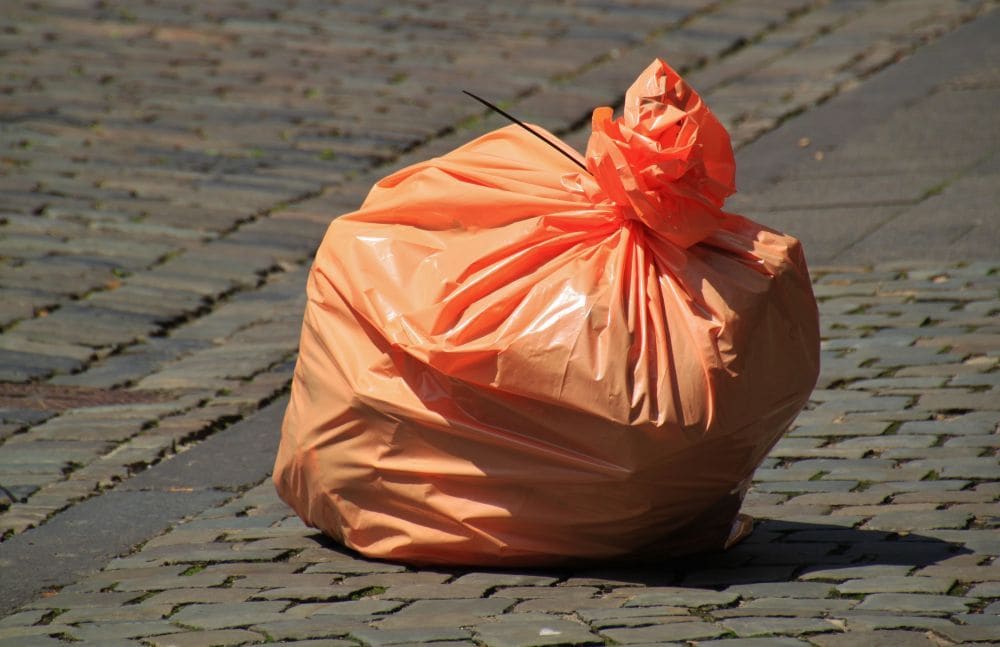
“Waste”: that is what we are talking about. Every day, we discard approximately 1 kg per person — a statistical average considering middle-class urban residents with consumer-driven lifestyles. This data comes from the World Bank’s What a Waste report, which monitors global waste generation. The average reaches 1 kg per day in cities and can climb to 2.5 kg in developed countries.
Now imagine this calculation: 1 kg × 365 days × 8.3 billion people. The number is enormous, to the point that we find “waste” everywhere: streets, parks, beaches, and even islands of plastic and packaging drifting through the oceans. What we need to understand and acknowledge is that “waste” does not truly exist. What we casually call “trash” is actually made up of materials and objects that are no longer interesting or useful to us, but that still remain products and resources within a circular production chain.
By incorporating Circular Economy principles into our everyday actions, we create alternatives that transform waste into recycled materials and gradually eliminate our conflict with “trash.” This simple shift confirms that we are living through a new stage in the evolution and adoption of Circular Economy practices in our daily lives. We already understand the need to avoid or reduce plastic bag consumption in supermarkets. The consumer stops being a passive user of disposable products and becomes an “activist” with the right and the means to keep materials circulating within productive systems.
We collectively co-create this among all actors in the value chain, forming a virtuous cycle. The next step is to question all disposable packaging — what we buy, how we consume, and what we do to recycle. It means thinking and rethinking before consuming, reusing, and separating materials correctly. It is simple, but it requires greater commitment, adjustments, and behavior change. We must abandon automatic habits: throwing everything away mixed together or buying anything without considering how and where it will be discarded later.
The potential for reducing waste
Proper disposal is important and necessary, but the best solution is always to generate less waste in the first place. This requires behavior change to increase our potential for reducing discarded materials. Here are some examples:
- Buying in bulk — Reduces waste weight by up to 25% by eliminating primary packaging.
- Home composting — Reduces by 40% to 50% the volume sent to landfills by transforming organic waste into a resource.
- Choosing durable products — Especially in fashion and electronics, this can reduce personal waste by more than 100 kg per year by avoiding programmed obsolescence.
- Refusing unnecessary purchases — Reduces 100% of what would eventually be discarded.
Our decisions make all the difference. Imagine if, now that we know this, we controlled our consumerist impulses and reflected on every purchase. What would we gain?
These systemic behavior changes could reduce urban solid waste generation by up to 80%.
Where does the 80% figure come from?
If we analyze the average urban “trash bag”:
- 50% is organic matter, which can be diverted through composting or biogas systems.
- 30% consists of dry recyclables such as paper, plastic, metal, and glass that can remain in the cycle through packaging design and reverse logistics.
In total, by changing behavior — separating waste and rethinking consumption — while infrastructure supports these practices, an 80% reduction becomes a technically achievable goal.
When we begin to care about what products are made of, how to repair them, and how to recycle them, we stop being mere “consumers” and become “resource keepers.” Intelligence here lies not only in materials, but also in business models:
- Local markets — Buying from local producers whenever possible facilitates repair, reuse, and recycling.
- Challenges of national and global supply chains — Eliminating the concept of waste requires local and systemic infrastructure. In today’s globalized model, it is difficult to ensure that smart packaging in one country will not become waste in another country lacking processing technology. This “reality check” has made discussions more cautious and less focused on slogans.
- Smart packaging with RFID/QR codes — Enables tracking so companies know where packaging is and can encourage consumers to return it for cleaning and reuse.
- Servitization — Instead of selling products that become waste, companies sell services, maintaining responsibility for end-of-life management.
- Refill subscription systems — Consumers reuse the same spray bottle indefinitely, adding only water and concentrated active ingredients.
- And, of course, sometimes the best option is simply not making the purchase.
The Circular Economy continues to grow, tackling broader and more complex challenges while maturing. We follow this evolution closely, collaborating to “keep materials at their highest value.” Today, the main focus lies in strategies to rethink or refuse unnecessary consumption. In practice, the goal of preventing the generation of 1 kg of waste per day — and reducing it more each day — remains the most honest metric of success.
To stay informed and updated, we recommend following Ellen MacArthur Foundation and, of course, the publications and social channels of Movimento Circular.
A designer from Buenos Aires, living in Brazil since 1996. He holds a degree in Industrial Design from the University of Buenos Aires (Argentina). He works with strategic and exploratory design, and consulting in design for innovation and management, developing products, projects, systems, and services. He has taught Design and Sustainability, with educational projects carried out in universities in Argentina, Brazil, Colombia, Ecuador, and Mexico. In coordinating projects for companies, governments, and Latin American institutions, he has won awards in Argentina, Brazil, Spain, and Italy. His current focus is on Design for Social Innovation, within the creative economy context, toward a Circular Economy system.
*This text was automatically translated using artificial intelligence and subsequently reviewed. However, minor differences may still exist when compared to the original version in Portuguese.
This content stays open because many people support it.
The Círculo do Movimento brings together those who give every month, from R$ 17.
Cancel whenever you want, in one click.
citar este artigo
MOVIMENTO CIRCULAR. 1 kg per day: the challenge of reducing waste and rethinking consumption. Movimento Circular, May 18, 2026. Available at: https://movimentocircular.io/en/blog/1-kg-per-day-the-challenge-of-reducing-waste-and-rethinking-consumption.
Your organization already has a circular agenda. What is its next step?
See how to take part