
artigo ·Fundamentals
O1NE packaging gains prominence in Brazilian awards
A partnership articulated by Movimento Circular brought together Dow and Valgroup with Catarina Café e Amor to develop and adopt O1NE packaging.
· 3 min de leitura
By Arlene Carvalho, from the Circular Movement
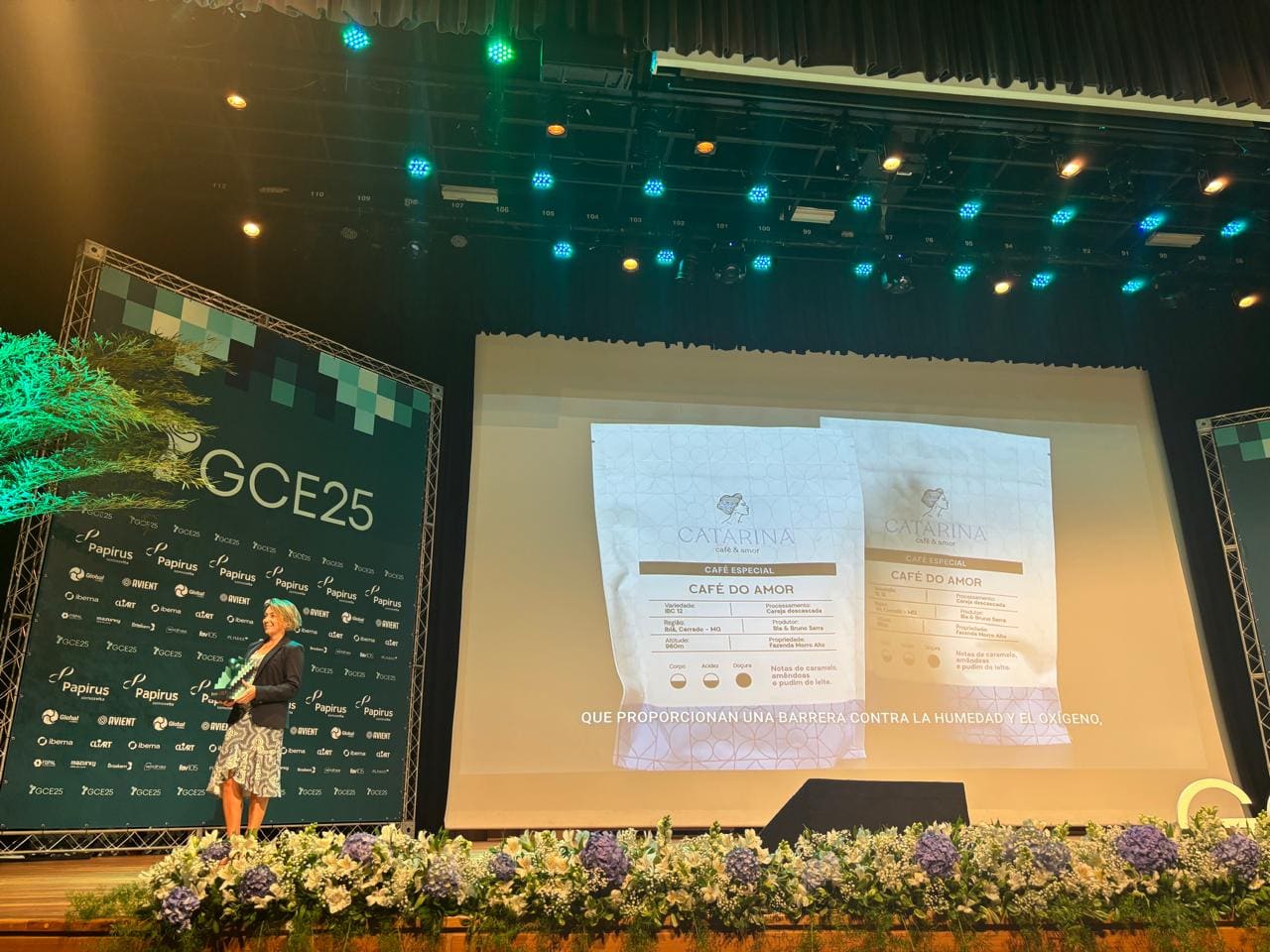
O1NE, the first coffee packaging designed for recycling in Brazil, closes its launch year securing prominence in national industry awards. The initiative won the 2025 Grandes Cases de Embalagem Award and took gold at the Plástico Sul Award in the Sustainability category; recognitions that reinforce its role as a milestone for circularity in the country.
The case is the result of a partnership coordinated by the Circular Movement, which connected Dow and Valgroup, responsible for developing the technology, with Catarina Café e Amor, the premium roastery that pioneered the adoption of the solution in its product line.
For Vinícius Saraceni, general director of the Circular Movement, being part of these achievements brings a sense of pride.
“We are proud to contribute to the transition to circularity in a practical and objective way and with scalable potential, and to be able—through a collaborative innovation process—to transform the entire market,” he reflects.
Letícia Vanzetto, Market Development Manager at Dow, states that the recognitions reinforce the company’s role as a strategic partner in building a more resilient future.
“We believe that innovation is only truly transformative when it is born from collaboration, and this project is a concrete example of that. This technology has the potential to transform the sector and inspire other markets to adopt more sustainable solutions from the start.”
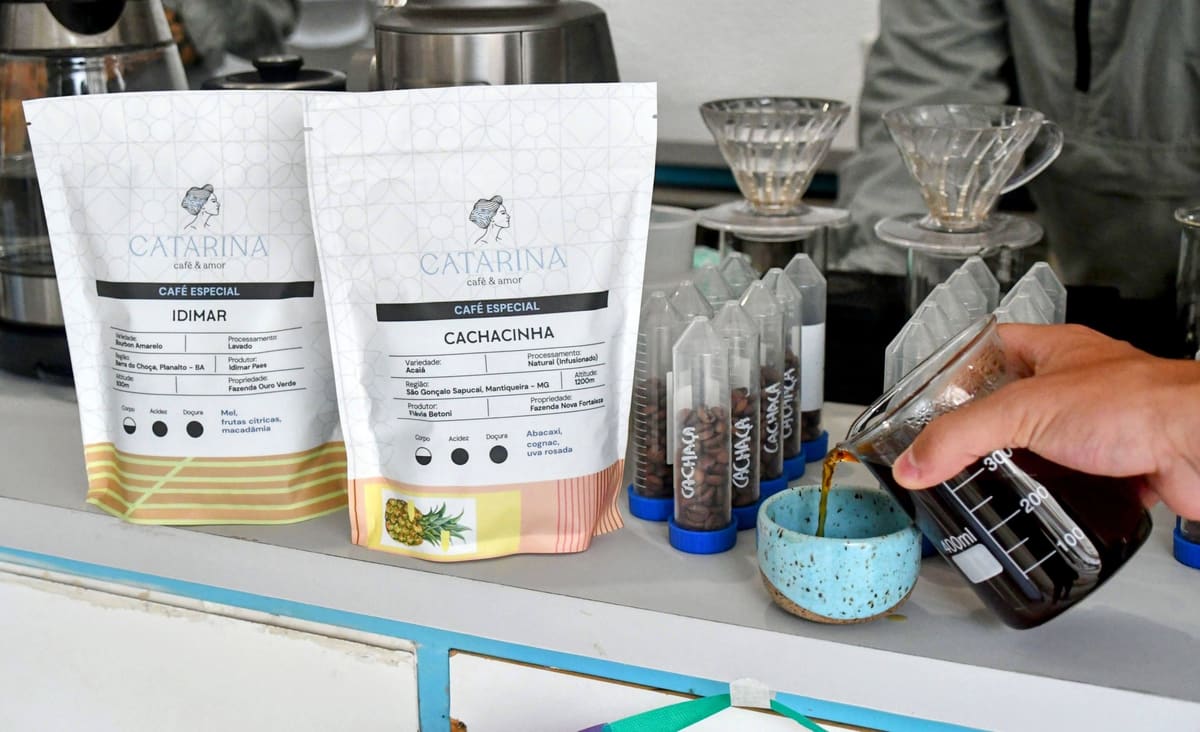
In addition to the awards received by the O1NE packaging case, Catarina Café e Amor was chosen by Folha de S.Paulo as the best coffee shop in São Paulo, establishing itself as a reference in quality and environmental responsibility. A victory that reinforces the brand’s commitment to offering excellent experiences without compromising respect for the planet.
A new generation of circular packaging
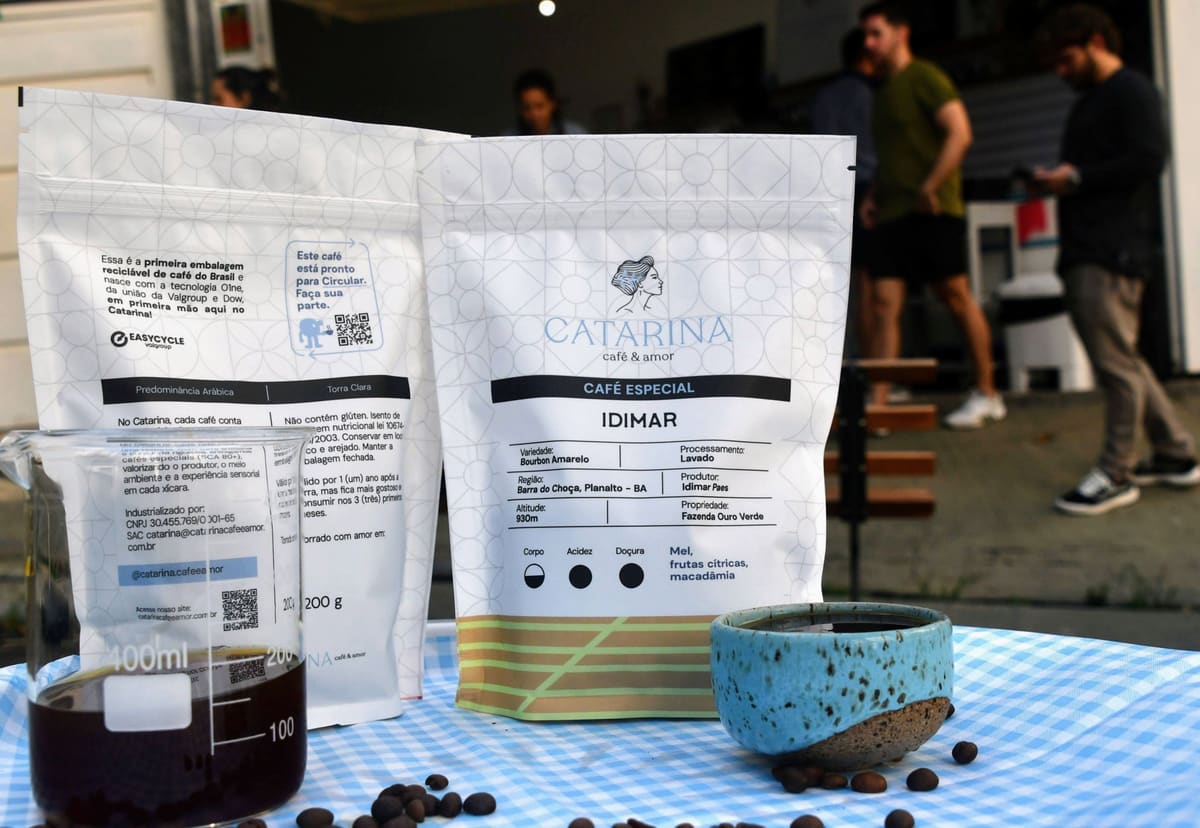
The O1NE packaging was created from the challenge of developing a coffee package more aligned with Circular Economy principles. The initiative sought to simplify the structure of flexible packaging, enabling its return to the production cycle and reducing the environmental impact associated with discarding hard-to-recycle materials.
The packaging is made of 95% high-density polyethylene (HDPE), which facilitates recycling by eliminating mixed materials found in traditional coffee packaging, such as aluminum and paper. Its simple design preserves the coffee’s quality and fits into the Brazilian recycling chain, being compatible with the production of new items such as softener bottles, liquid soap, packaging for rice, beans, sugar, and ice bags.
João Alves, Innovation Manager at Valgroup, states that O1NE’s adoption by the Catarina Café e Amor team shows how change requires boldness with responsibility.
“Catarina Café e Amor understood the challenge and opened the doors to bring to market what many large companies were more conservative about adopting. This movement toward packaging that supports recycling and is designed for circularity is essential for reducing the environmental impact of consumption,” he explains.
The result is packaging with a functional design and optimized structure that maintains the product’s quality and aroma while incorporating circularity practices from conception to post-consumption. The case demonstrates how the coordination between industry, innovation, and sustainable values can generate concrete solutions for a more regenerative future.
*This text was automatically translated with the help of artificial intelligence and reviewed. Still, there may be slight differences compared to the original version in Portuguese.
This content stays open because many people support it.
The Círculo do Movimento brings together those who give every month, from R$ 17.
Cancel whenever you want, in one click.
citar este artigo
MOVIMENTO CIRCULAR. O1NE packaging gains prominence in Brazilian awards. Movimento Circular, December 15, 2025. Available at: https://movimentocircular.io/en/blog/first-coffee-packaging-designed-for-recycling-in-brazil-gains-prominence-in-national-awards.
Your organization already has a circular agenda. What is its next step?
See how to take part