
artigo ·Fundamentals
Circular Economy: a fundamental path to regeneration
Regenerating is connected to major paradigm shifts related to human presence and action on the planet.
· 5 min de leitura
*Prof. Dr. Edson Grandisoli, Ambassador of the Circular Movement
“There are two different types of change: one that occurs
within a given system, which remains unchanged,
and another whose occurrence transforms the system itself.”
(Watzlawick et al., 1980)
The concept of regeneration has gained prominence in the literature and in the discourse of different fields in recent years, such as:
- medicine (tissue regeneration);
- agriculture (regenerative agriculture);
- tourism (regenerative tourism);
- urbanism (regenerative cities);
- design (regenerative design);
- economics (regenerative economics).
Although it is a polysemic concept — that is, one to which multiple meanings may be attributed depending on its use — there is, at its core, at least one fundamental point that is independent of that use: the need to “do things better,” rather than merely “do better things” (Reed, 2007). This simple play on words shifts our focus from “what we are doing” to “how and why we are doing it.” In other words, it places choices, purposes, and processes in the foreground, and only then seeks to understand what is materially necessary and possible within socio-environmental limits.
To many, this may seem like nothing more than an interesting play on words, but from this perspective, regeneration in practice means promoting a profound transformation in the way we conceive development, production, consumption, conservation, and sustainability. Regeneration, in this sense, is connected to major paradigm shifts related to human presence and action on the planet.
Reed (2007), for example, emphasizes that regeneration requires a leap from the “green” paradigm—centered on efficiency and mitigation—to a truly systemic paradigm that starts from the uniqueness of each place. For him, regenerating means working with the interdependencies between human beings and nature, recognizing that projects, products, or enterprises do not exist in isolation, but rather as manifestations within a dynamic web of relationships. Thus, a regenerative project is not limited to being “less harmful”; it actively contributes to the health, complexity, maintenance, and evolution of the system of which it is a part.
This approach values coevolution, based on the idea that human and ecological development are mutually dependent and must strengthen one another.
Sanford (2018), in turn, argues that regenerating implies activating the potential of people, communities, and organizations so that they become agents capable of perceiving patterns, intervening creatively, and continuously generating value. Thus, regeneration is less a set of techniques and more a way of thinking and acting, grounded in principles such as wholeness, interdependence, contextual uniqueness, shared responsibility, and continuous learning. This approach shifts responsibility for sustainability—from one based on external metrics and fixed goals—to the internal and collective cultivation of capabilities, awareness, and intention.
In this context, becoming once again an integral part of nature and participating in its cycles in a harmonious and interdependent way is the major paradigm shift we must pursue in the coming centuries, seeking to reconcile new visions of social and economic development. Far beyond technique and technology, the focus must be on how we will reconcile ourselves with environments and all other forms of life, pursuing an ancestral future. If sustainability already seems like a distant horizon, regeneration places it even further ahead.
And what are the possible paths for this transformation?
In fact, many of them are already being pursued today.
The circular economy, as advocated by the Ellen MacArthur Foundation, for example, has become an increasingly important model within regenerative logic. The circular economy proposes replacing the linear model of extraction–production–disposal with systems of continuous material flows, in which products, components, and resources are kept in use for as long as possible, mimicking natural cycles. The point here is to make technical and biological cycles function as a single system, seeking a profound reorganization of the economy so that it generates value for all, in harmony with the cycles of life. In other words, the dialogue between regeneration and the circular economy becomes especially fertile when circularity is understood not merely as a material management technique, but as a principle of reconnection with the regenerative patterns that have always existed in nature.
Circular systems strengthen soils, restore biodiversity, ensure nutrient flows, encourage sharing and reuse models, stimulate shorter and more collaborative production chains, and foster local economies. At the same time, by promoting design for reuse, recyclability, disassembly, and repair, the circular economy creates the material conditions for socio-economic systems to express their capacity for renewal—which is precisely the core of regeneration.
When we speak of regeneration, therefore, we are dealing with a concept that involves a philosophical, ethical, complex, and systemic framework, while the circular economy offers methodologies for reorganizing flows of energy and matter in alignment with that framework.
Regeneration asks:
“What potential does this place, this community, this enterprise wish to express?”.
The Circular Economy responds:
“How can we organize materials, processes, and business models to support that potential?”.
Thus, a circular economy that contributes to a regenerative economy does not merely minimize negative impacts, but expands the capacity for resilience, diversity, and prosperity of living systems. It recognizes that value is not only economic, but also historical, ecological, social, and cultural, and that these values reinforce one another. Instead of extracting and discarding, it seeks to nourish and renew; instead of linearity, it promotes living and interconnected cycles; instead of centralization, it favors distributed and collaborative networks. The result is a vision of the future in which human development and planetary health are not opposites, but expressions of the same evolutionary process.
At this moment in history, the guiding question must shift from “How can I be more sustainable?” to “How can I be more regenerative?”. Part of the answer to this question involves caring for, creating, and restoring bonds of trust—an attribute that has been in crisis for many decades. But that is a topic for a future conversation.
*This text was automatically translated with the help of artificial intelligence and reviewed. Still, there may be slight differences compared to the original version in Portuguese.
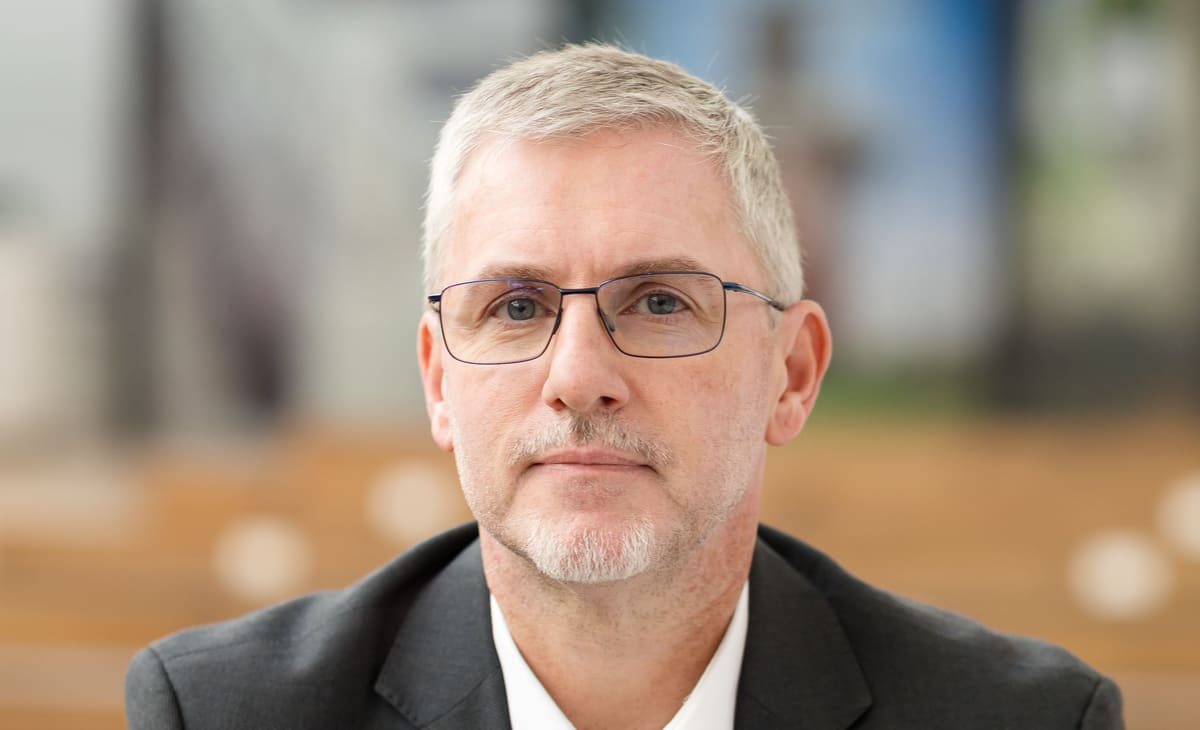
*Profº Drº Edson Grandisoli
Ambassador of the Circular Movement, he holds a Master’s degree in Ecology, a PhD in Education and Sustainability from the University of São Paulo (USP), and a postdoctoral fellowship through the Global Cities Program (IEA-USP). He is also a specialist in Circular Economy through the UN’s UNSCC. He is also a co-founder of the Schools for Climate Movement, a researcher in the field of Education, and associate editor of the journal Ambiente & Sociedade.
This content stays open because many people support it.
The Círculo do Movimento brings together those who give every month, from R$ 17.
Cancel whenever you want, in one click.
citar este artigo
MOVIMENTO CIRCULAR. Circular Economy: a fundamental path to regeneration. Movimento Circular, January 22, 2026. Available at: https://movimentocircular.io/en/blog/circular-economy-a-fundamental-path-to-regeneration.
Your organization already has a circular agenda. What is its next step?
See how to take part